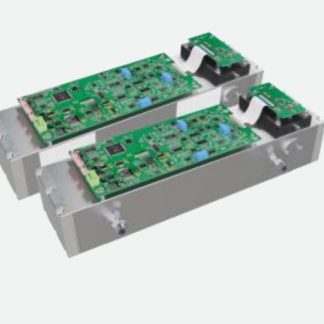
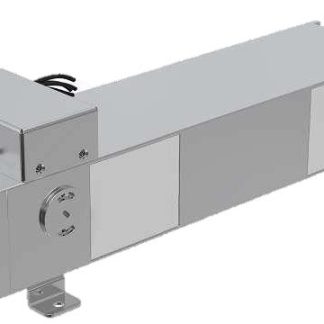
The HVAC/R Industry saw the publication of Addendum aa to the ANSI / AHSRAE 62.1-2019 standard. Addendum aa allows for an alternative to standard Ventilation Rate Procedure calculations to allow for the IAQ Procedure (IAQP) as a means to maintain design compound concentrations and particulate matter (PM2.5) in indoor environments below design limits.
So – Now What?
Addendum aa set out to establish limits for certain compounds, particulate matter (PM2.5) and procedures that would be used to validate indoor design compound concentrations after the building is completed with the goal of ensuring occupant satisfaction. But how can the building occupants ensure that these levels are maintained post-completion?
Real-Time IAQ Performance Data Is Key!
Addendum aa exponentially increases the value of measuring IAQ parameters in real-time. Cubic Sensors & Instruments has the most complete portfolio of IAQ sensors – Particulate Matter (PM1.0, PM2.5 & PM10), Volatile Organic Compounds (VOC), Formaldehyde, Carbon Dioxide (CO2 ) and Carbon Monoxide (CO)- available to our Partners with the goal of ensuring they can respond to the new regulations faster than their competitors.
Innovative companies know that measuring these components will ensure their customers have peace of mind knowing that their buildings are performing to the design limits established when the building was first completed.
Contact Innovaer for a list of ASHRAE Addendum aa compliant sensors!
Innovaer Technologies and Cubic Sensors & Instruments are excited to showcase all the new innovative air and gas sensing technologies that have rolled out since we all last gathered together for AHR!
Come to Booth C1080 to learn how our technology portfolio can solve the most demanding air quality applications… and the direction our future innovations are heading!
Innovaer Technologies and Cubic Sensors & Instruments have launched the AM4205 A2L refrigerant leak detection sensor designed to detect leaks of R32 and R32-based blends in HVAC/R systems.
The AM4205 A2L refrigerant leak detection system is designed to ensure UL alignment in the areas of:
15+ Years Expected Lifetime
Fast Response Time: < 10 Seconds
Measurement Accuracy – No False Positives
Long-term Measurement Stability
Maintenance Free Installation – Reference Channel and Self-Compensation remove the need for ABC
No Measurement Impact due to Temperature or Humidity Changes – High Humidity Alarm
Ultra-Low Power NDIR Carbon Dioxide (CO2) Sensors for Battery Powered Applications
The CM1106SL-NS is the next generation of NDIR sensors specifically designed for battery powered applications without sacrificing measurement accuracy. Additionally, the integrated ABC algorithm ensures that the sensor is providing reliable carbon dioxide (CO2 ) measurement for over 15 years.
Range: 0-5000ppm
+/-40ppm +3% with dynamic averaging
37uA current consumption with 2-minute measurement cycle
74uA current consumption with 1-minute measurement cycle
Innovaer Technologies has the products designed to bring your company’s IoT IAQ solutions to market faster than your competition. These innovative “combination” sensors that measure multiple air quality parameters in a single device and make the measured values available via a single streamlined UART interface.
Cubic Sensors & Instruments, the world’s leading particulate matter sensor manufacturer, and Innovaer Technologies are proud to announce the launch of the PM2016 particulate matter sensor (PM1.0, PM2.5, PM10 & particle counting output).
The PM2016 is part of a checkmate strategy designed to ensure Cubic S&I has a portfolio of indoor air quality sensors that not only provides solutions for all customers’ applications, but also directly replaces competitive technology. With advanced features, more long-term durability, and better price points, Innovaer Technologies delivers TCO (total cost of ownership) optimization for our customers.
Industry Disruptive Pricing!
Option to add temperature and humidity sensors in the same housing (volume dependent)
Longer Lifetime – 14+ years installed life
Accuracy & repeatability throughout a larger Working Temperature
Mass concentration and Particle Count Output – 0.3µm, 0.5µm, 1.0µm, 2.5µm, 5.0µm and 10µm
Advanced Algorithms & Innovative Hardware – API, Matrix Calibration and proprietary laser diode and constant speed fan
Product Features
Lab-Grade Accuracy
Cubic S&I particulate matter sensors directly measure all particle sizes up to PM10 – and are not calculated as in competitive technologies. Direct measurement of the particle size combined with API, a matrix temperature and humidity calibration scheme as well as innovations in the laser diode and constant speed air intake fan ensure that the PM2016 performs as well as many lab-grade PM technologies.
API – Auto-Particle Identification
The API algorithm allows the sensor to determine the application environment and “switch” between temperature compensated calibration curves specific to the application environment in real-time – smoke, A1 dust or atmospheric levels of particulate. The API algorithm determines the application environment by analyzing the particle density based on the particle size, distribution characteristics and dust concentration ensuring the PM sensor outputs a accurate and reliable PM measurement accurate to the GRIMM and TSI standards.
Anti-Dust Structure
Over time solid particulate and liquid droplets carried in the measured gas will affect the performance of any dust sensor by accumulating on the laser diode or photo-detector. Cubic S&I created a proprietary anti-dust structure within the PM sensor ensuring the Cubic particulate matter sensors can provide an accurate and repeatable measurement for up to 14 years of continuous operation. This anti-dust structure is internal to the PM sensor and redirects a small side stream of inlet air. This side stream of air is then conditioned and passed through an internal HEPA filter before being passed between the laser diode and photo-diode to create a clean air “barrier” between the measurement surfaces and the inlet air samples. This prevents accumulation of solid particulate or liquid droplets.
Innovaer Technologies will be exhibiting at AHR 2022 in Las Vegas – come by to review all of our innovative air and gas sensing technologies as well as future innovations that will reshape the air quality measurement market!
Innovaer Technologies and Cubic S&I products have not been impacted by the current microprocessor shortages seen by our competitors – our products have been engineered to be able to support multiple microprocessor vendors so that our production lines never stop.
Products are available that are a direct mechanical & electrical replacement for Senseair, Amphenol and Sensirion products and all sensing solutions are available with a standard 3 to 4-week lead time regardless of the volumes; 1-week lead time with a forecast!
Innovaer Technologies and Cubic S&I are reshaping the price-performance ratio for air and gas sensing applications with innovative, robust, reliable and repeatable sensors at disruptive pricing.
Cubic S&I is the world’s largest NDIR CO2 sensor & laser PM sensor manufacturer with ISO and IATF certifications.
Summary
Innovaer and Cubic S&I are not affected by the microprocessor shortages
All products have a 3 to 4-week lead time – 1 week with the submittal of a forecast
Direct electrical / mechanical drop-in sensors for common Senseair, Amphenol and Sensirion products
Manufacturing footprint is ISO & IATF certified
Innovaer – the best technology at the best price!
Call, email, text – we can solve your air & gas sensing application challenges…
Innovaer Technologies and Cubic S&I are the market leaders in particulate matter measurement technologies – manufacturing over 5 million particulate matter sensors per year.
Are you establishing the right partnerships ensuring you stay ahead of the competition?
Why use a Particulate Matter (PM) sensor?
The “Internet of Things” revolution is making its way into our homes. As consumers begin to understand the impact of air quality on their everyday life, there is a growing need to create cost-effective and reliable air quality measurement technologies that implement multiple sensing elements capable of measuring the parameters associated with an Air Quality Index – Carbon Dioxide (CO2), Particulate Matter (PM1.0, PM2.5, PM10), Volatile Organic Compounds (VOC), Formaldehyde (HCHO), Temperature and Humidity.
In conjunction with increased consumer focus on air quality, The US EPA has created a layered strategy for monitoring air quality during the COVID-19 pandemic to include acceptable levels of particulate matter – solid particles or liquid droplets in air –small enough to deposit deep in the lungs.
With regard to primary (health-based) standards for fine particles (generally referring to particles less than or equal to 2.5 micrometers (mm) in diameter, PM2.5), the EPA is revising the annual PM2.5 standard by lowering the level to 12.0 micrograms per cubic meter (μg/ m3) so as to provide increased protection against health effects associated with long- and short-term exposures (including premature mortality, increased hospital admissions and emergency department visits, and development of chronic respiratory disease), and to retain the 24-hour PM2.5 standard at a level of 35 μg/m3.
Cubic S&I particulate matter sensors directly measure the particle size and quantity and can output the mass concentration and particle density via a UART or I2C communication interface. The challenge in PM sensing applications is dust sources are dynamic with varying distribution of particles and ever-changing density of the particulate to be measured.
The API algorithm allows the sensor to determine the application environment and “switch” between temperature compensated calibration curves specific to the application environment in real-time – smoke, A1 dust or atmospheric levels of particulate. The API algorithm determines the application environment by analyzing the particle density based on the particle size, distribution characteristics and dust concentration ensuring the PM sensor outputs an accurate and reliable PM measurement accurate to the GRIMM and TSI standards.
Anti-Dust Structure Design
Over time solid particulate and liquid droplets carried in the measured gas will affect the performance of any dust sensor by accumulating on the laser diode or photo-detector. Cubic S&I created a proprietary anti-dust structure within the PM sensor ensuring the Cubic PM sensors can provide an accurate and repeatable measurement for up to 12 years of continuous operation. This anti-dust structure is internal to the PM sensor and redirects a small side stream of inlet air. This side stream of air is then conditioned and passed through an internal HEPA filter before being passed between the laser diode and photo-diode to create a clean air “barrier” between the measurement surfaces and the inlet air samples. This prevents accumulation of solid particulate or liquid droplets.
In late January 2021, the U.S. Presidential Administration put an executive order in place directing the Senate the begin the process of ratifying the Kigali Amendment and the phaseout process for using hydrofluorocarbons (HFCs) as the primary refrigerants in the HVAC/R industry.
As the North American HVAC/R markets prepare for an industry-wide shift to refrigerant blends with a lower Global Warming Potential (GWP), new application challenges have been identified that would require compliance with new system-level performance requirements.
R32 (difluoromethane) and R32-based refrigerant blends have been identified as the lead alternative refrigerant with the capability of reducing the global warming potential (GWP) of refrigerants in the HVAC/R market. Additionally, these blends have the potential to represent a 5% reduction in the HVAC/R demand on the power grid – $6b savings in power generation cost avoidance per the US Energy Information Administration while providing a zero-ozone depletion potential. The unique challenge with R32 and R32-based refrigerant blends is that these gases are mildly flammable per ISO 817:2014, and as such have an A2L classification that would require the HVAC/R systems to incorporate a gas leak detection and mitigation system according to UL 60335-2-40 Edition 3 Annex GG & LL.
Innovaer Technologies and Cubic Sensors & Instruments have launched the AM4205 A2L refrigerant leak detection sensor designed to detect leaks of R32 and R32-based blends in HVAC/R systems.
The AM4205 A2L refrigerant leak detection sensor is designed to ensure UL alignment in the areas of:
Innovaer Technologies and Cubic Sensors & Instruments have launched the AM4205 A2L refrigerant leak detection sensor designed to detect leaks of R32 and R32-based blends in HVAC/R systems. The AM4205 A2L refrigerant leak detection sensor is designed to ensure UL alignment in the areas of:
15+ Years Expected Lifetime
Fast Response Time
Measurement Accuracy – No False Positives
Long-term Measurement Stability
Maintenance Free Installation – Reference Channel and Self-Compensation remove the need for ABC
No Measurement Impact due to Temperature or Humidity Changes – High Humidity Alarm
The strategy states that controlling indoor air quality offers the greatest reduction in COVID-19 transmission after social distancing in occupied spaces.
Ventilation – measuring CO2 levels determines if there is an appropriate air-exchange rate in the space. Simply put, fresh air helps reduce the amount of virus suspended in air.
Filtration – the COVID-19 virus likes to “ride” on suspended particles in air. Measuring real-time particulate matter values ensures that filtration systems are actively filtering out these particles.
Surface Cleaning & Sanitizing – cleaning products give off dangerous odors. Measuring VOC levels after a cleaning cycle can ensure spaces are safe to enter post cleaning.
Speed to Market is critical for OEMs tasked with addressing these market drivers – Innovaer Technologies is the leader in providing robust & reliable sensors to our partners at the “Speed of Innovation” with a proven track record of taking multi-year phase gate product developments and completing them in months.
New Federal Guidelines & Standards are coming that will outline when and how it will be safe to open our schools and workplaces to preCOVID-19 capacities. This will place an even higher premium on monitoring indoor air quality.
Most buildings, schools and homes are lacking the infrastructure to monitor indoor air quality, so how can one quickly and easily create visibility to IAQ?
The AM7000 Air Quality Monitor is a simple plug-and-play device that provides an elegant display for measuring CO2, PM2.5, VOC, temperature, and humidity in real-time and helps interpret the measured values with a simplified “stop light” visual for each measured value.
The Innovaer Tech Team recently came across an article about a tech start-up that is developing IAQ (indoor air quality) measurement & COVID-19 mitigation systems that are 99.9% effective in cleaning indoor air to the transportation industries in the UK and Ireland.
First the system measures: carbon dioxide, VOCs, particulate matter, temperature & humidity to create an “air quality index.” Then the system obliterates the coronavirus with a combination of a proprietary “sterionizer,” a copper-laced HEPA filter and a UVC light source.
When people breathe, cough, sneeze or talk we emit tiny particles that COVID-19 can attach to. Measuring these particles with a laser particulate matter sensor capable of outputting PM2.5 & PM10 values (direct measurement of particles ranging from 1.5 to 10 microns) is critical in ensuring a before and after snapshot of how filtration systems are performing.
The Cubic AM1008W incorporates all the critical IAQ measurements into a single PCB, allowing you to focus on established organizational expertise so you can bring similar products into other markets at the “Speed of Innovation.”